
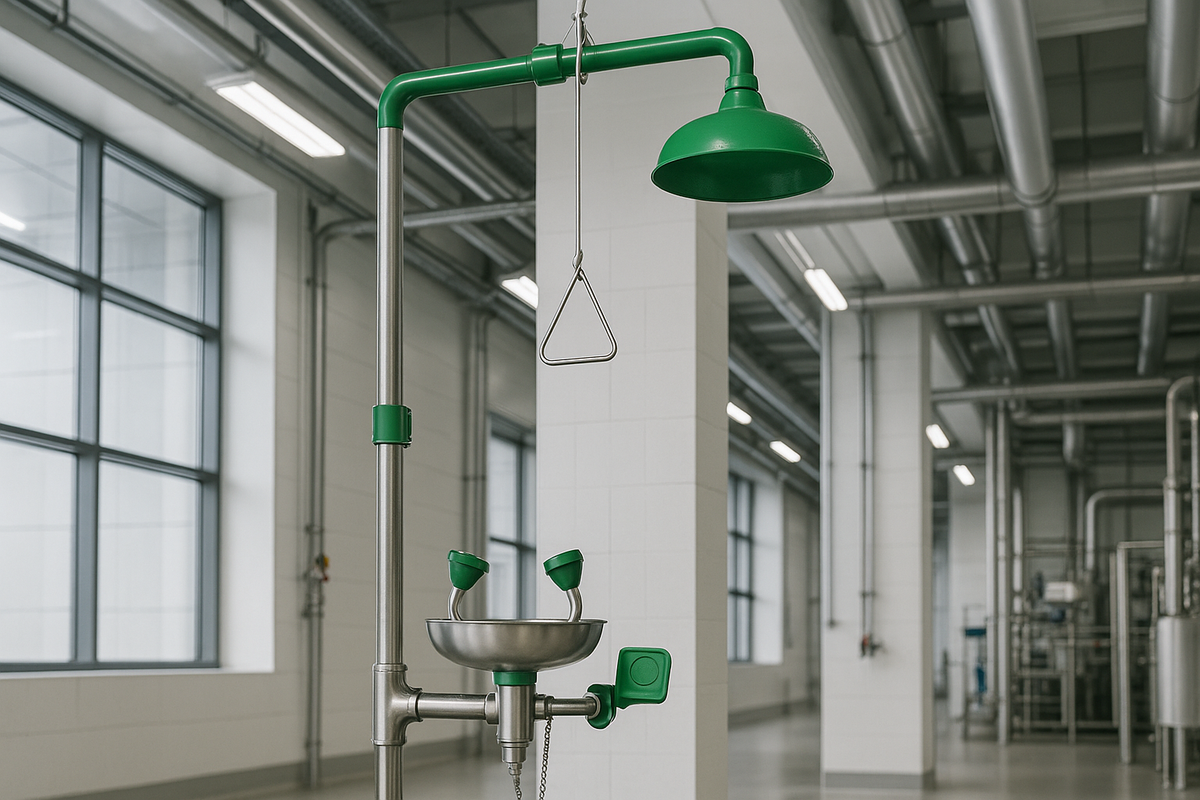

You can install a fully compliant safety shower and eyewash station—but without the right systems in place, compliance can quietly slip.
The real difference between a compliant site and a risky one isn’t just the equipment—it’s the process behind it.
⚠️ When Compliance Becomes Inconsistent
Most workplaces understand the need for emergency safety showers and eyewash stations, especially when working with hazardous chemicals, dust, or contaminants.
They install the right units, position them within reach, and align with standards like AS4775, which sets clear expectations for performance, accessibility, and operation.
But over time, without structured systems, things start to break down.
Weekly checks get missed. Flow isn’t properly tested. Water quality isn’t verified. Units may be partially blocked or not operating at full capacity.
The equipment is there—but compliance becomes inconsistent.
🚨 Small Gaps in Process Can Lead to Big Risks
This is where the risk builds.
Standards like AS4775 don’t just require installation—they require that equipment is ready for immediate use at all times. That means correct flow rates, clear access, and reliable operation the moment it’s activated.
Without simple systems in place:
• Weekly inspections can be overlooked or rushed
• Faults may go unnoticed or unreported
• Units may not deliver required flow or duration
• Audit preparation becomes reactive instead of routine
In an emergency, there’s no time to troubleshoot. If a unit doesn’t perform as expected, the consequences can be serious.
Compliance isn’t just a requirement—it’s a safeguard.
🛠️ Simple Systems That Keep Safety on Track
The easiest way to maintain compliance is to build simple, visible systems that make checks consistent and easy to follow.
One of the most effective methods is using on-unit safety tags.
By attaching a safety tag directly to each safety shower or eyewash station, you create a clear, trackable process:
• Record weekly activation tests
• Log inspection dates and sign-offs
• Instantly see when the unit was last checked
This removes reliance on memory or separate paperwork and keeps compliance visible at the point of use.
Supporting this with a structured routine aligned to AS4775 strengthens reliability:
• Weekly activation to confirm water flow and operation
• Verification of flow performance and duration
• Ensuring clear, unobstructed access at all times
• Checking for damage, leaks, or blockages
• Monitoring water temperature (tepid range)
When these processes are embedded into normal site routines, compliance becomes automatic rather than reactive.
✅ From Compliance to Confidence on Site
Putting simple systems in place delivers immediate and lasting value:
• Confidence that emergency equipment will perform when needed
• Faster, easier inspections with clear visual records
• Improved accountability across teams
• Reduced risk of non-compliance during audits
Most importantly, it ensures that workers have access to fully functioning emergency equipment when seconds matter most.
📊 Why Systems, Not Memory, Deliver Safer Outcomes
Workplaces that implement visible, repeatable systems—like safety tagging and scheduled checks—consistently achieve stronger safety outcomes.
Instead of relying on scattered records or memory, each unit tells its own story. A quick glance shows when it was last tested and whether it’s ready for use.
This simple shift—from reactive checks to structured systems—helps maintain continuous compliance with AS4775 and keeps safety front of mind.
🔍 A Simple Check That Can Strengthen Your Safety Process
Take a moment to review your current setup.
Can anyone on your site walk up to a safety shower or eyewash station and instantly confirm when it was last tested?
If not, a simple system—like on-unit safety tags and consistent weekly checks—can make compliance easier, clearer, and more reliable.
For more information about AS4775-compliant safety shower and eyewash features and requirements or to discuss your requirements please contact Big Safety.