Love the raincoat. Had a lot of trouble finding a full length coat in a suitable product for driving cyclonic rain. The price was right and my husband loves the bright colour as he can see me anywhere on the property.
Workplace Safety Tags
3 products
Showing 1 - 3 of 3 products
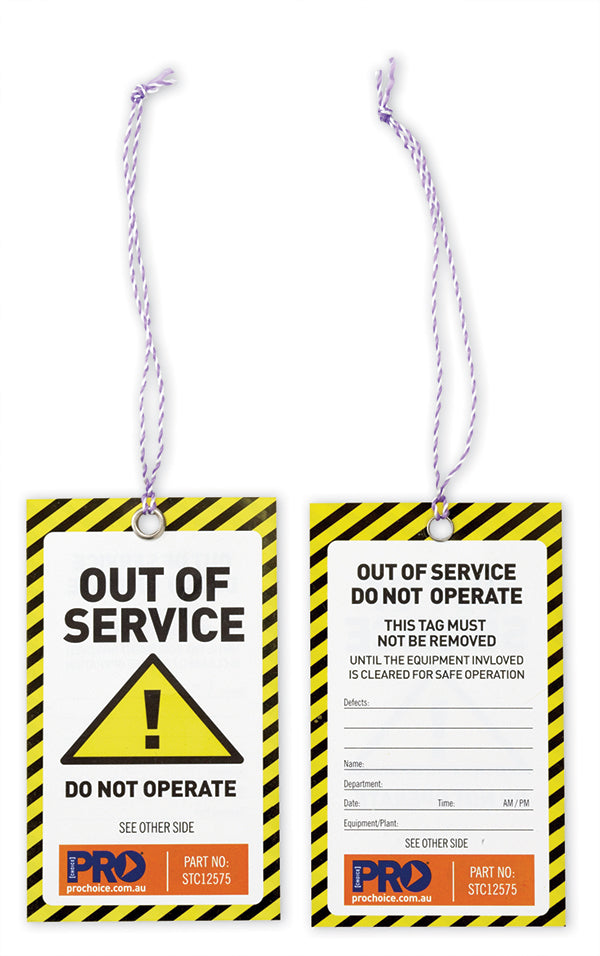
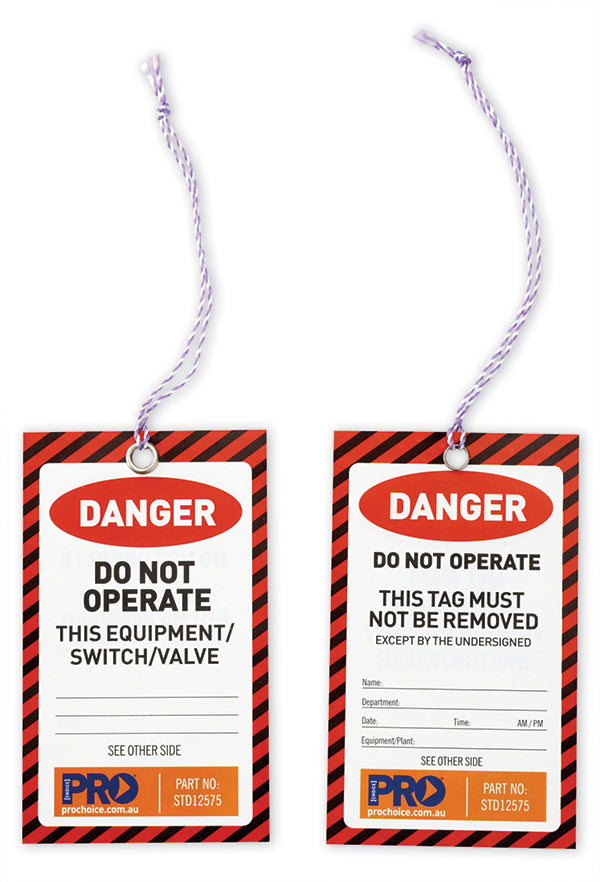
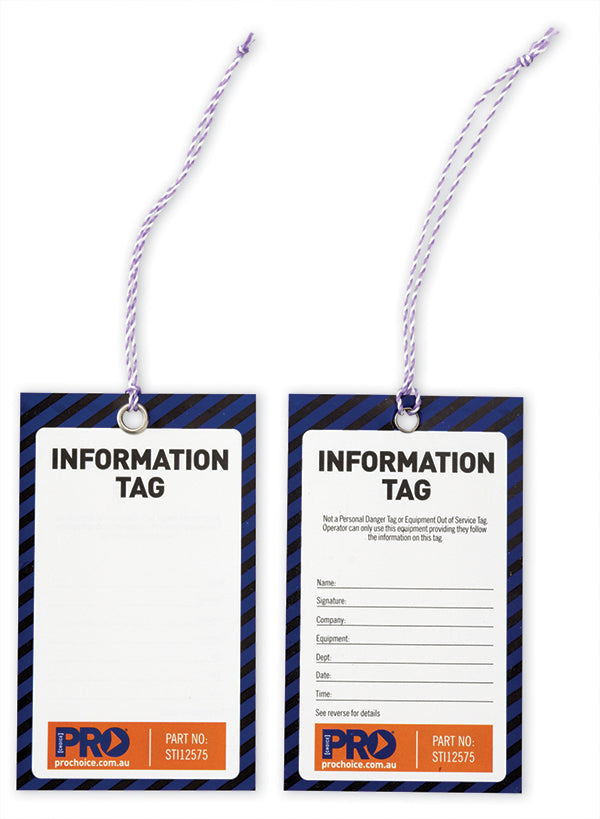
Workplace safety tags are essential for identifying potential hazards, displaying safety information and maintaining a secure working environment. There are various types available, each serving a specific purpose. Some of the most common tags include:
-
Caution: Out-of-service tags
-
Danger: Do not operate tags
-
Information: Safety instruction tags
What Is Safety Tagging?
Safety tagging is the process of attaching visible and informative tags to machinery, equipment or hazardous areas in the workplace. These tags aim to warn employees, contractors and visitors about the potential risks or dangers associated with the tagged item or area.
The purpose of safety tagging is to prevent accidents, injuries and fatalities by ensuring that individuals are aware of and can take necessary precautions when encountering hazards in the workplace.
Caution Tag vs Danger Tag: What’s the Difference?
Caution and danger tags serve to communicate the level of risk associated with a specific hazard in the workplace.
A caution tag is used to warn individuals about a potential hazard that may result in minor or moderate injuries if not properly addressed. These tags are often yellow or orange in colour and may include words like "Caution" or "Warning".
As the name suggests, a danger tag is used to indicate a more severe hazard that could result in serious injury or even death if not properly managed. Danger tags are typically red and feature the word "Danger".
What Should Be on a Danger Tag?
Along with the word “Danger” in bold and clearly visible lettering, the danger tag should also include the following information:
- A brief yet specific description of the hazard, detailing the nature of the risk and the possible consequences of not following safety protocols.
- Any necessary safety precautions or instructions to be taken to avoid or minimise the risk associated with the hazard e.g. wearing appropriate personal protective equipment (PPE), shutting off power sources or following specific procedures.
- The date the tag was installed and the name or signature of the person responsible for placing the tag. (This ensures proper communication and accountability.)
- Contact information of the person or department responsible for addressing the issue, in case further information or assistance is required.
When Should a Danger Tag Be Used?
A danger tag should be used in situations where there is a high risk of serious injury or death if the hazard is not dealt with correctly. Some examples of when to use a danger tag include:
- Areas that contain hazardous materials, chemicals or substances that can cause severe harm or death if accidental exposure occurs.
- When specific processes or tasks undertaken in the workplace involve a high risk of injury, such as confined space entry, work at heights or activities that generate excessive noise or vibration.
Browse Our Safety Tags and Other Products
At BIG Safety, we believe that workplace safety is crucial for the well-being of all employees and visitors. In addition to our safety tags (see below), we also offer a wide range of high-quality safety products.
From eyewash and safety shower stations, sunscreen protection and dust masks and respirators to dangerous goods storage cabinets, we have it all. Place your order today to ensure a compliant workplace that protects your team from potential hazards and reduces the risk of accidents.


