
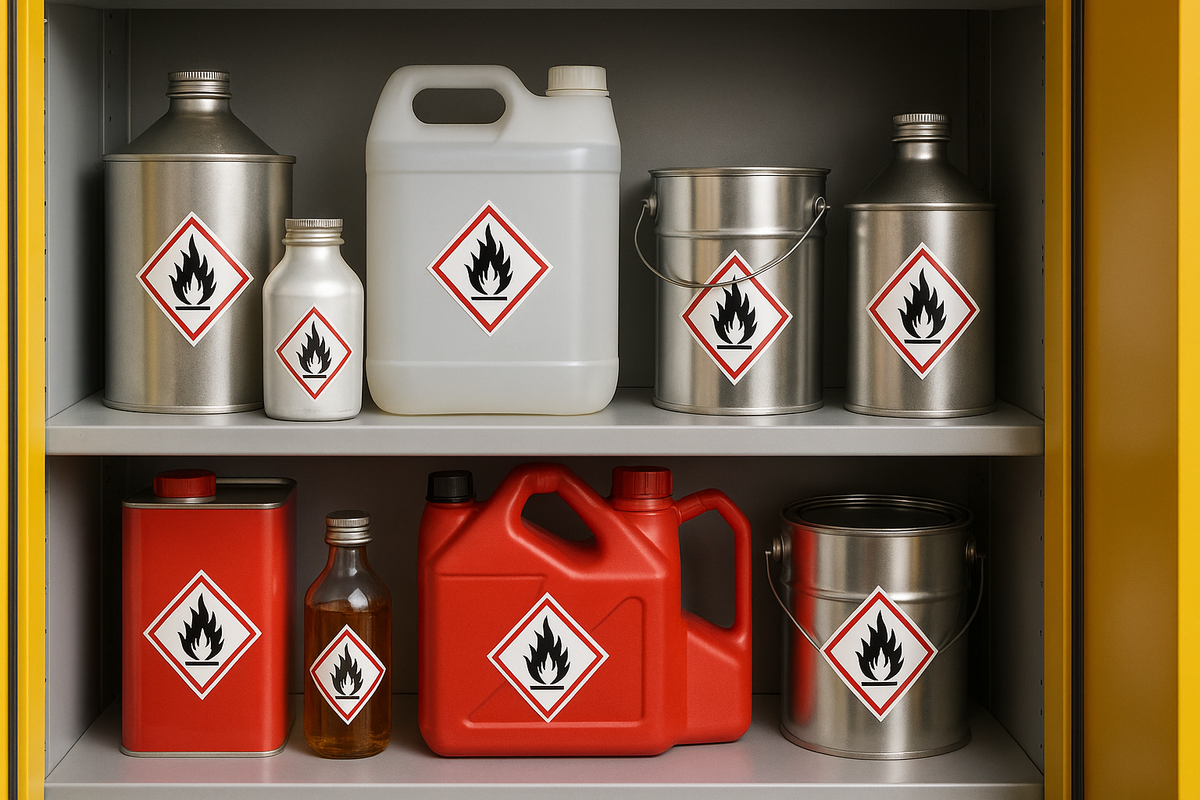
Flammable goods cabinets are designed to store Class 3 Dangerous Goods - flammable liquids - and combustible liquids, as classified by the UN Model Regulations, the Australian Dangerous Goods (ADG) Code, and the Globally Harmonised System (GHS).
Common liquids suitable for storage in a Justrite or Pratt cabinet at BIG Safety include:
| Category | Examples | Flash Point |
|---|---|---|
| Class 3 Flammable Liquids (PG I) | Petrol, diethyl ether, acetone, some paint thinners | Below 23°C with boiling point ≤35°C |
| Class 3 Flammable Liquids (PG II) | Toluene, ethanol, methanol, isopropyl alcohol, most solvents | Below 23°C with boiling point >35°C |
| Class 3 Flammable Liquids (PG III) | Kerosene, mineral turpentine, white spirits, xylene, paints | 23°C to 60°C |
| Combustible Liquids (C1) | Diesel, linseed oil, pine oil, some fuel oils | 61°C to 93°C |
Flammable goods cabinets are not suitable for: pressurised gas cylinders (use a gas cylinder cage); oxidising agents (a serious incompatibility - use a dedicated oxidiser cabinet); corrosive chemicals (use a corrosive goods cabinet); or toxic substances (use a toxic goods cabinet). Storing incompatible chemical classes together in the same cabinet is a serious fire and reaction hazard.