
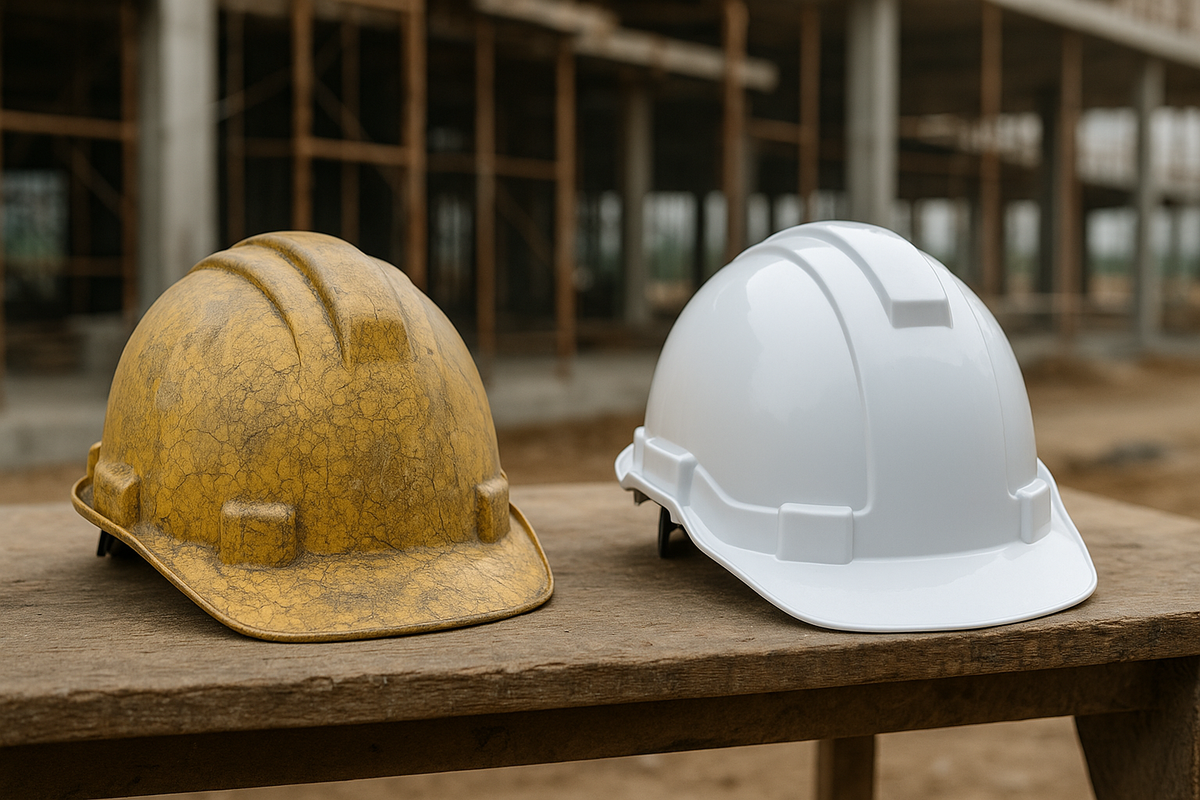

When was the last time you checked the age of your hard hat—not just how it looks?
Hard hats are one of the most trusted pieces of safety equipment on any worksite. They’re worn daily, often without a second thought. But here’s the reality: even the toughest hard hat has a limited lifespan, and relying on an expired one could mean relying on protection that no longer performs when it matters most.
The Problem
Many workers and safety managers assume that if a hard hat looks fine, it must still be safe. No cracks, no dents, no problem—right?
Not quite.
Hard hats are typically made from durable plastics like HDPE, designed to absorb and distribute impact. However, these materials naturally degrade over time. Exposure to UV rays, heat, chemicals, and repeated use slowly weakens the structure—even when there are no visible signs of damage.
This is where the real risk lies.
A hard hat that appears “good enough” may already be compromised. UV exposure can make the shell brittle. Chemical contact can weaken the material. Daily wear and tear reduces its ability to absorb impact.
Even more often overlooked is the suspension system inside the helmet. This is what actually absorbs and distributes the force of an impact. If it’s worn, stretched, or brittle, the helmet can’t do its job properly.
In high-risk environments like construction, warehousing, and manufacturing, this silent deterioration increases the risk of serious head injuries—often without anyone realising the protection has already failed.
The Solution
The good news is that managing hard hat safety is straightforward once you understand the key timelines.
A common industry guideline is:
• Replace hard hats 5 years from the date of manufacture
• Or 3 years from when the helmet is first put into service
To make this easier, many helmets include a label where you can write the wearer’s name and issue date—helping track real working life, not just shelf age.
In addition:
• Replace harness systems every 12–24 months
• Inspect helmets before each use
• Remove any helmet showing cracks, fading, brittleness, or damage immediately
Simple, consistent checks can make a big difference.
The Benefits
Getting this right isn’t just about compliance—it’s about confidence.
When your team is using properly maintained head protection, you’re creating a safer, more reliable work environment. Workers can trust their equipment. Safety managers can be confident in their systems. And businesses reduce the risk of preventable injuries and downtime.
It also supports stronger safety culture. When workers understand that equipment has a lifecycle, they’re more likely to take ownership of their gear and report issues early.
Industry guidance consistently reinforces the importance of tracking both manufacturing date and in-service life. Helmets exposed to harsh environments often need replacing sooner than expected, and suspension systems frequently wear out long before the shell.
Simple practices—like recording issue dates and performing regular inspections—are proven ways to maintain effective head protection across worksites.
For a deeper breakdown on hard hat lifetimes and replacement tips, read more here:
https://bigsafety.com.au/blogs/blog/hard-hat-life-span-when-does-a-hard-hat-need-to-be-replaced
🎯 Bonus: Free Hard Hat Setup – March & April Only
Make your team site-ready without the extra setup cost.
For a limited time, enjoy FREE setup on 1 & 2 colour hard hat print runs when you order a minimum of 20 hard hats valid till 30/4/2026..
Whether you’re onboarding new crew members, refreshing your branding, or preparing for upcoming projects, this is a practical way to maintain compliance, visibility, and a professional presence on site—while keeping costs under control.
✔ Minimum order: 20 hard hats
✔ Applies to: 1 & 2 colour logo prints
✔ Valid: March & April
Strong branding. Clear identification. Smarter safety investment.