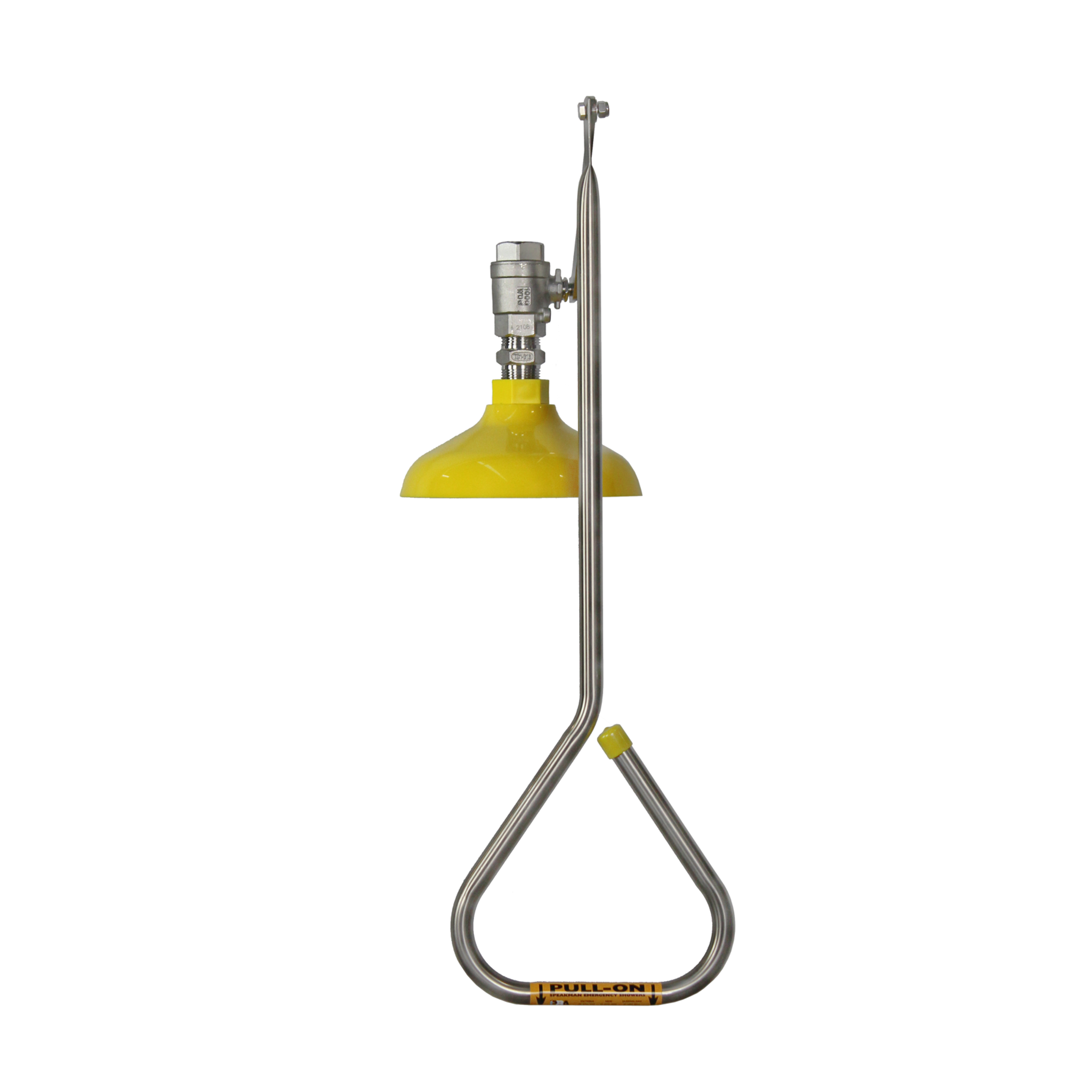
SE220 Emergency Deluge Shower Head (Ceiling Mounted)

SKU: DGSE220
7 reviews

Price:
Sale price$308.00

Description

The SE220 is a ceiling mounted emergency deluge shower which clears up floor space, minimising clutter and potential hazards.

Also features a pull down stainless steel triangular pendant with a stay open valve.

All shower heads are non-clogging, self cleaning and can be supplied to fit any application. 

The impeller action of these heads distributes floods of water without voids in the shower pattern that ensures complete body coverage for faster decontamination.

Manufactured to comply with AS 4775-2007.

*NOTE: This item may require additional freight charges

Frequently Asked Questions

Emergency safety showers in Australia must comply with AS4775-2007 — Emergency Eyewash and Shower Equipment. This is Australia's equivalent of the international ANSI/ISEA Z358.1 standard. For any Australian business where workers may be exposed to hazardous or corrosive chemicals, compliance is mandatory under WHS legislation.

AS4775-2007 sets minimum requirements for:

  • Flow rate and flush duration
  • Shower head height and spray pattern dimensions
  • Tepid water delivery (water temperature range)
  • Activation method and stay-open valve design
  • Location, access path, and signage
  • Weekly inspection and testing intervals

All safety showers in BIG Safety's range - including the full Speakman series - are manufactured and tested to comply with AS4775-2007.

Under AS4775-2007, an emergency safety shower must deliver a minimum of 75.7 litres per minute (L/min) of flushing fluid for a continuous duration of at least 15 minutes. This flow rate is set high enough to rapidly dilute and flush hazardous substances from the entire body surface.

The Speakman combination shower units at BIG Safety — including the SE607, SE612, and SE675 — all deliver 76 L/min, meeting the AS4775 minimum.

While AS4775-2007 is the primary equipment standard, several other Australian Standards and regulations trigger the requirement for safety showers depending on the substances handled or the activities performed:

  • AS1940-2004 - The storage and handling of flammable and combustible liquids: requires eye/face wash or a deluge shower within 10 metres (but not closer than 2 metres) of stores where packages are opened
  • AS3780-2008 - The storage and handling of corrosive substances: specifies eye/face wash or deluge shower requirements for areas used in the charging and maintenance of electric storage batteries, and other corrosive substance handling areas
  • WHS Regulations - Under Australian Work Health and Safety legislation, employers have a duty to provide adequate first aid facilities; where chemical exposure risk is identified through a risk assessment, a compliant safety shower is typically required
  • State-specific Workcover and SafeWork requirements - may impose additional site obligations depending on industry and jurisdiction

Always conduct a documented site-specific risk assessment and consult the relevant standards for your industry and specific substances being handled.

AS4775 sets the following mandatory placement requirements for emergency safety showers:

  • 10 seconds from the hazard: the shower must be reachable in no more than 10 seconds from the point of potential exposure - typically within 10-15 metres on a clear, level path
  • Same level as the hazard: the shower must be on the same floor level as the hazard - no stairs, steps, or ramps between the hazard point and the unit
  • Unobstructed path: the travel path must remain clear at all times, wide enough for an injured worker moving without full vision
  • Clearly identified: must be signposted with AS4775-compliant emergency shower signage and ideally a green indicator light visible across the work area
  • Well illuminated: sufficient lighting to make the station visible in normal and emergency operating conditions

Special case - strong acids and caustics: for workplaces handling concentrated acids or caustic substances, AS4775 recommends the eye/face wash component be positioned immediately adjacent to the hazard, not merely within 10 seconds of travel.

To deliver the AS4775-required 75.7 L/min minimum flow rate for a full 15-minute flush, the plumbing supply must be adequately sized. Key infrastructure considerations include:

  • Supply pipe sizing: safety showers typically require a 25mm (1 inch) minimum bore supply line to deliver adequate flow without pressure loss. Undersized 15mm domestic-grade pipework is a common non-compliance failure point at existing facilities.
  • Water pressure: flow regulators (such as the internal 20 GPM regulator fitted to Speakman units) are designed to operate within a defined inlet pressure range. Verify the static and dynamic pressure at the connection point before installation.
  • Simultaneous operation: if a combination unit is installed, the supply must maintain full flow to both the shower and eyewash simultaneously, without pressure loss in either component.
  • Tepid water supply: the water supply must deliver tepid water below 38°C.

A qualified plumber should be engaged for the installation and commissioning of any plumbed safety shower to confirm AS4775 compliance at the point of installation.

Yes. AS4775 requires that safety showers and eyewash stations be clearly identifiable in all operating conditions. Compliant signage serves two functions: it helps an uninjured co-worker quickly locate the unit to assist a casualty, and it helps an injured worker with impaired vision navigate to the station as quickly as possible.

Requirements and best practice include:

  • AS4775-compliant emergency shower and eyewash signs — standard green and white poly or photoluminescent signs mounted prominently above or near the unit
  • Green indicator light — strongly recommended by AS4775 for visibility across open factory, warehouse, or outdoor work environments
  • Floor markings — yellow safety zone floor markings around the unit; this area must remain permanently clear of stored goods, pallets, or equipment at all times
  • High-visibility unit colour — Speakman units feature yellow shower heads and activation handles for rapid visual identification even in busy or low-visibility environments

BIG Safety stocks the full range of AS4775-compliant emergency shower and eyewash signs in poly and metal format to suit all installation types.

AS4775 requires that plumbed safety showers be activated and tested weekly. The purpose of weekly activation is to:

  • Flush stagnant water from the supply line, reducing the risk of bacterial contamination - including Legionella pneumophila - in standing water between uses
  • Verify that the activation valve opens freely and the stay-open mechanism functions correctly
  • Confirm adequate water flow and spray pattern at the shower head
  • Identify any visible damage to the shower head, bowl, nozzles, or activation handle before an emergency occurs

In addition to weekly activation, a formal annual inspection by a suitably qualified technician is required. This should cover plumbing connections, valve integrity, thermostatic mixing valve calibration (if fitted), and overall compliance with installation requirements including shower head height and spray pattern.

Inspection records must be maintained on site. In the event of a workplace incident, documented maintenance history is critical evidence for WHS compliance and workers compensation purposes.

Correct use of a safety shower in the first moments after exposure is critical to minimising injury severity. Workers should be trained to follow this sequence:

  1. Activate immediately - reach the shower within 10 seconds of exposure and pull the activation handle or step on the foot pedal. The stay-open valve will hold the shower running without further operator input.
  2. Remove contaminated clothing - use both hands to remove saturated clothing and PPE as quickly as possible. Chemical exposure through saturated clothing continues even during flushing.
  3. Position fully under the spray - stand with the full spray pattern covering the affected body area. The spray diameter is a minimum of 508mm at shoulder height, designed to cover the full upper body simultaneously.
  4. Flush for a minimum of 15 minutes - do not stop early, even if discomfort appears to reduce. Dilution and mechanical removal of chemical agents from skin tissue takes the full duration.
  5. Activate the eyewash simultaneously if eyes are affected - on a combination unit, the integrated eyewash can be operated at the same time as the shower from the same station.
  6. Seek immediate medical attention - after the flush, the worker must be assessed by a medical professional regardless of the apparent severity of the injury.

Regular first aid training and emergency drills significantly improve response speed and compliance when an actual exposure event occurs.

A safety shower that cannot be quickly returned to service after use or maintenance failure represents an ongoing compliance gap and a real safety risk. BIG Safety recommends maintaining an on-site inventory of common Speakman spare parts, including:

  • Shower head assembly - the most commonly replaced component after heavy use, physical impact, or mineral scale buildup
  • Stay-open ball valves - the 25mm shower valve and 15mm eyewash valve, along with associated seals and O-rings, should be inspected annually and replaced when showing wear
  • Eyewash nozzles and dust caps - nozzles can become blocked with sediment or mineral deposits between uses; dust caps protect nozzles from contamination and should be replaced when cracked or missing
  • Activation rods and foot pedals - mechanical components subject to wear in high-traffic or harsh outdoor environments
  • Thermostatic mixing valve cartridges - if a tepid water mixing valve is installed, the cartridge requires periodic replacement per the manufacturer's maintenance schedule
  • Eyewash bowl and drain assembly - for combination units with a stainless steel bowl, the bowl and drain seal should be checked at each inspection

BIG Safety stocks the full range of Speakman accessories and spare parts. Maintaining critical spares on-site eliminates extended periods of non-compliance while waiting for parts to be shipped.

There are five main types of Safety Showers and eyewash stations, each suited to different workplace environments:

  • Plumbed eyewash stations (wall, pedestal, bench, or over-sink mounted) — permanently connected to a building's water supply. Best for facilities with a fixed hazard location and reliable plumbing infrastructure.
  • Portable self-contained units (45L, 106L) — pressurised stainless steel tanks filled with potable water. Best for remote sites, construction, mining, and agriculture where no plumbing is available.
  • Combination eyewash and safety shower units — provide simultaneous eye, face, and full-body decontamination from a single station. Recommended wherever whole-body chemical exposure is a risk.
  • Eye and face wash stations — deliver higher flow (11.4+ L/min) to flush both eyes and the full face, including cheeks and forehead. Suited to environments with airborne chemical, dust, or mist hazards.
  • Personal and supplemental eyewash bottles — small first-flush units kept at the point of exposure. These do not replace primary stations; they provide immediate flushing while the worker moves to a full eyewash station.

Product selection should always be based on a documented risk assessment that considers hazard type, the body areas at risk, number of workers exposed, and site plumbing availability.

You can use the Big Safety Safety Shower and Eyewash Decision Flow Chart  to assist in determining the correct equipment for your needs.

We mainly use TNT & Border Express dependant on the delivery location throughout Australia.

You may also like

Recently viewed