
🌡️ Managing Water Temperature in Safety Shower and Eyewash Systems During Australia’s Hottest Months
Australian summers place extreme pressure on workplace systems and emergency equipment alike. While heat stress and UV exposure often take centre stage, there’s another risk quietly building in the background: water temperature inside safety showers and eyewash stations.
When seconds matter most, water that is too hot or too cold can compromise an emergency response. Tepid water isn’t a luxury. It’s a critical part of effective decontamination, compliance, and real-world workplace safety.
🌞 The Summer Challenge
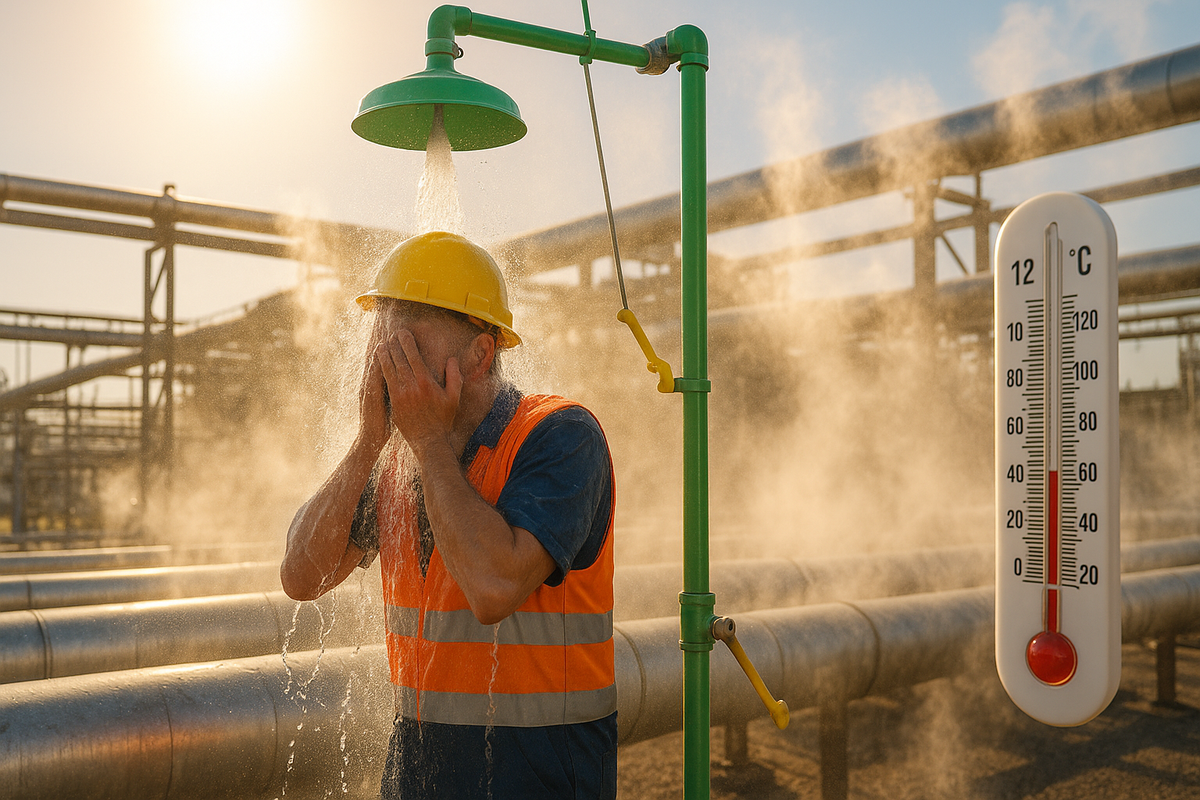
During peak summer conditions, exposed pipework, external tanks, and uninsulated supply lines can heat rapidly under direct sun. Stagnant water sitting in lines throughout the day may reach temperatures capable of causing scald injuries within seconds.
In a chemical splash incident, the last thing an injured worker needs is another hazard. If water is excessively hot, it can:
-
Cause additional burns
-
Increase panic and distress
-
Discourage workers from flushing for the required duration
On the opposite end, extremely cold water can trigger shock, shorten flushing time, and reduce overall effectiveness. In both scenarios, the performance of the safety shower or eyewash is compromised precisely when it is needed most.
📏 Why “Tepid” Really Matters
Australian Standards and guidance consistently refer to tepid water for emergency drench and eyewash systems. Tepid is generally understood to fall within a range of approximately 15°C to 38°C.
This range is not about comfort alone. It ensures that workers can remain under a safety shower or use an eyewash for the full recommended flushing duration without added harm.
Tepid water supports:
-
Continuous flushing
-
Reduced chemical absorption
-
Lower risk of thermal injury
-
Better overall emergency outcomes
A common oversight in Australian workplaces is assuming mains water will remain within a safe range year-round. In exposed construction sites, warehouses with external pipework, and remote locations with tank-fed systems, that assumption can be risky.
🔧 Practical Ways to Manage Water Temperature
Managing water temperature doesn’t require complex engineering, but it does require proactive planning. Simple, practical measures can make a significant difference:
Insulation
Insulating pipework and tanks helps stabilise water temperature during extreme heat. For tank-fed systems, insulation jackets reduce solar heat gain and limit temperature spikes.
Thermostatic or scald-protection valves
In some installations, mixing or thermostatic valves prevent excessively hot water from reaching the outlet.
Strategic placement
Positioning units away from direct sun where possible reduces heat exposure.
Routine testing
Regular inspections should include temperature checks, particularly during the hottest parts of the day—not just flow and activation testing.
Planning for Real Australian Conditions
Effective safety is about anticipating real-world conditions. Australian summers are intense, and emergency systems must be designed to perform under those pressures.
When a safety shower or eyewash delivers consistent tepid water, it builds confidence. It ensures compliance expectations are met. Most importantly, it protects people during high-risk moments.
In workplace safety, small design choices can have life-changing impacts. Managing water temperature is one of them.